Elevating Digital Design with Hand-Drawn Doodle Flower Paint Splashes and Watercolor Elements
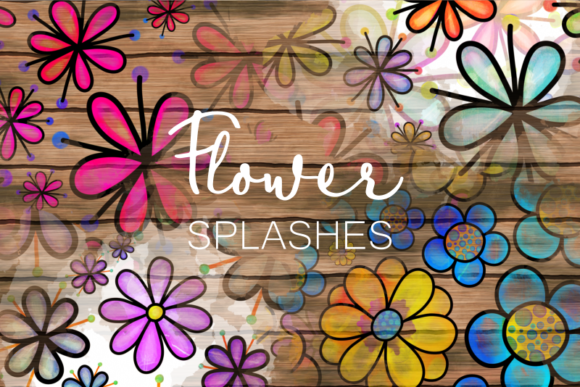
In the ever-evolving landscape of digital design, there is a persistent yearning for authenticity. While sleek vector graphics and minimalist layouts have their place, a significant trend has emerged that celebrates the imperfect, the organic, and the deeply personal. This movement centers around artistic assets like Hand Drawn Doodle Flower Paint Splashes and Hand Drawn Pretty Watercolor Floral Splashes. These are not merely decorative clip art; they are foundational artistic design elements that bridge the gap between traditional fine art and modern digital creation.
For designers, crafters, and business owners alike, understanding the utility and technical specifications of these assets is crucial. Whether you are creating a wedding invitation suite or branding for an organic skincare line, knowing how to leverage high-resolution, hand-drawn floral elements can transform a generic project into a bespoke masterpiece. This guide explores the significance, application, and technical nuances of integrating these watercolor and doodle splashes into your creative workflow.
The Intersection of Traditional Art and Digital Utility
To fully appreciate the value of hand-drawn paint splashes, one must understand what distinguishes them from standard digital illustrations. A "hand-drawn" element implies that the asset originated in the physical world—created with real brushes, watercolors, ink, and paper—before being digitized. This process captures the unpredictable flow of pigment, the texture of the paper grain, and the unique pressure variations of the artist’s hand.
When we discuss doodle flower paint splashes, we are referring to a specific aesthetic that combines playfulness with elegance. Unlike rigid botanical illustrations, doodles possess a spontaneous energy. When paired with watercolor techniques, the result is a soft, ethereal quality that feels approachable yet sophisticated. In modern design psychology, these organic shapes serve to soften corporate messaging, add warmth to educational materials, and evoke nostalgia in personal stationery.
Why Transparency and Resolution Matter
A common misunderstanding among beginners is assuming all digital images function equally in design software. However, professional results depend entirely on file format and resolution. The collection described here offers a distinct advantage by providing files at 300dpi (dots per inch) and 3000 pixels in dimension.
Understanding DPI is essential for anyone moving between screen and print. Web graphics typically exist at 72dpi, which looks crisp on a monitor but appears pixelated and blurry when printed. At 300dpi, these floral splashes retain their integrity even when scaled up for posters or fliers. Furthermore, the availability of Transparent PNG Files is non-negotiable for layered design. A transparent background allows the floral splash to sit seamlessly over colored backgrounds, photographs, or textured papers without an unsightly white box surrounding the artwork. This flexibility is what transforms a static image into a versatile design tool.
Practical Applications Across Creative Disciplines
The versatility of having both opaque and transparent versions of these artistic elements cannot be overstated. Having 24 total files (12 opaque and 12 transparent) provides a comprehensive toolkit for various scenarios. Here is how these elements fit into different aspects of work, creativity, and daily life.
Greeting Cards and Invitations
This is perhaps the most natural habitat for watercolor florals. In the realm of social stationery, trends shift quickly, but hand-painted flowers remain timeless. For wedding invitations, transparent splashes can be layered behind typography to create depth without obscuring legibility. Conversely, opaque versions might be used as standalone focal points on thank-you cards. The "doodle" aspect adds a whimsical touch suitable for baby showers or birthday parties, while the watercolor technique maintains enough refinement for formal events.
Business Branding and Marketing Collateral
Small businesses, particularly those in wellness, beauty, food, and artisanal crafts, often struggle to convey their brand personality through stock photography alone. Hand-drawn floral splashes offer a solution. They can be integrated into:
- Business Cards: Using a subtle splash in the corner creates visual interest and frames contact information organically.
- Fliers and Posters: Large-scale 3000px assets allow for bold background elements that draw the eye without competing with headline text.
- Packaging Design: Transparent florals can be overlaid on kraft paper or colored boxes to suggest handmade quality and eco-friendliness.
- Social Media Templates: Creating consistent branded frames using these splashes helps maintain visual identity across Instagram or Pinterest.
Scrapbooking, Journaling, and Personal Creativity
Beyond commercial use, these assets are vital for the booming digital planning and journaling community. Digital scrapbookers use transparent PNGs to layer memories, much like traditional paper crafting. For those who prefer physical media, the high-resolution opaque files can be printed onto sticker paper or cardstock, bringing digital convenience back to the tactile world of analog journaling. This hybrid approach allows creators to enjoy the best of both worlds: the infinite reproducibility of digital files and the sensory satisfaction of physical art.
Navigating Opaque vs. Transparent Assets
While many users instinctively reach for the transparent version, the opaque files included in this 24-file set serve a specific purpose that should not be overlooked. Understanding when to use each version demonstrates a higher level of design proficiency.
Transparent PNGs are your primary layering tool. Use them when you need the flower to interact with existing colors, when placing text over the image, or when combining multiple splashes to create a custom border. The lack of background data ensures smooth blending modes like "Multiply" or "Overlay" work effectively in software like Photoshop, Procreate, or Canva.
Opaque Versions, however, are invaluable for specific workflows. If you are designing a document with a solid white background and do not wish to manage complex layer masks, opaque files are faster to implement. They are also superior for certain printing methods where transparency can sometimes cause banding or color shifts. Additionally, if you are using older software or basic word processors that struggle with alpha channels in PNGs, the opaque version guarantees compatibility. Having both options ensures you never hit a technical roadblock mid-project.
Best Practices for Integration
To maximize the impact of these hand-drawn elements, consider the following educational tips for integration:
- Respect Negative Space: Watercolor splashes are visually busy. Always ensure there is adequate negative space for text. Do not place dark text directly over a dark portion of a splash unless you apply a contrasting overlay.
- Mix Scales: Don't just use the asset at 100% size. Scale it down to 20% for a subtle texture, or crop into it at 200% zoom to focus on a specific brushstroke detail. The 3000px resolution supports this experimentation without quality loss.
- Color Harmony: While these come in specific colors, digital tools allow for hue adjustments. Tweak the saturation or temperature of the splashes to match your specific brand palette or event theme perfectly.
- Layering Logic: Create depth by placing some splashes behind your main subject and others in front. This mimics real-world physics where foliage naturally frames a view.
Conclusion: Investing in Authenticity
In a digital ecosystem saturated with AI-generated imagery and repetitive vectors, Hand Drawn Doodle Flower Paint Splashes represent a return to human-centric design. They carry the imperfections and soul of traditional artistry while offering the precision and scalability required for modern production.
Whether you are a seasoned graphic designer looking to add texture to a minimalist layout, a bride designing your own stationery, or an educator creating engaging worksheets, these 24 high-resolution files provide the building blocks for authentic expression. By understanding the technical advantages of 300dpi transparency and the aesthetic power of hand-painted watercolor, you equip yourself to create designs that resonate on a deeper, more emotional level. Ultimately, these artistic design elements are more than just decoration; they are a language of warmth and creativity in an increasingly digital world.